Mastering Proportion: The Ultimate Guide to Dressing Well
Understanding proportion is the secret weapon of every well-dressed individual. This comprehensive guide breaks down the fundamental rules of balancing your silhouette, choosing flattering lengths, and creating harmonious outfits that enhance your body shape.
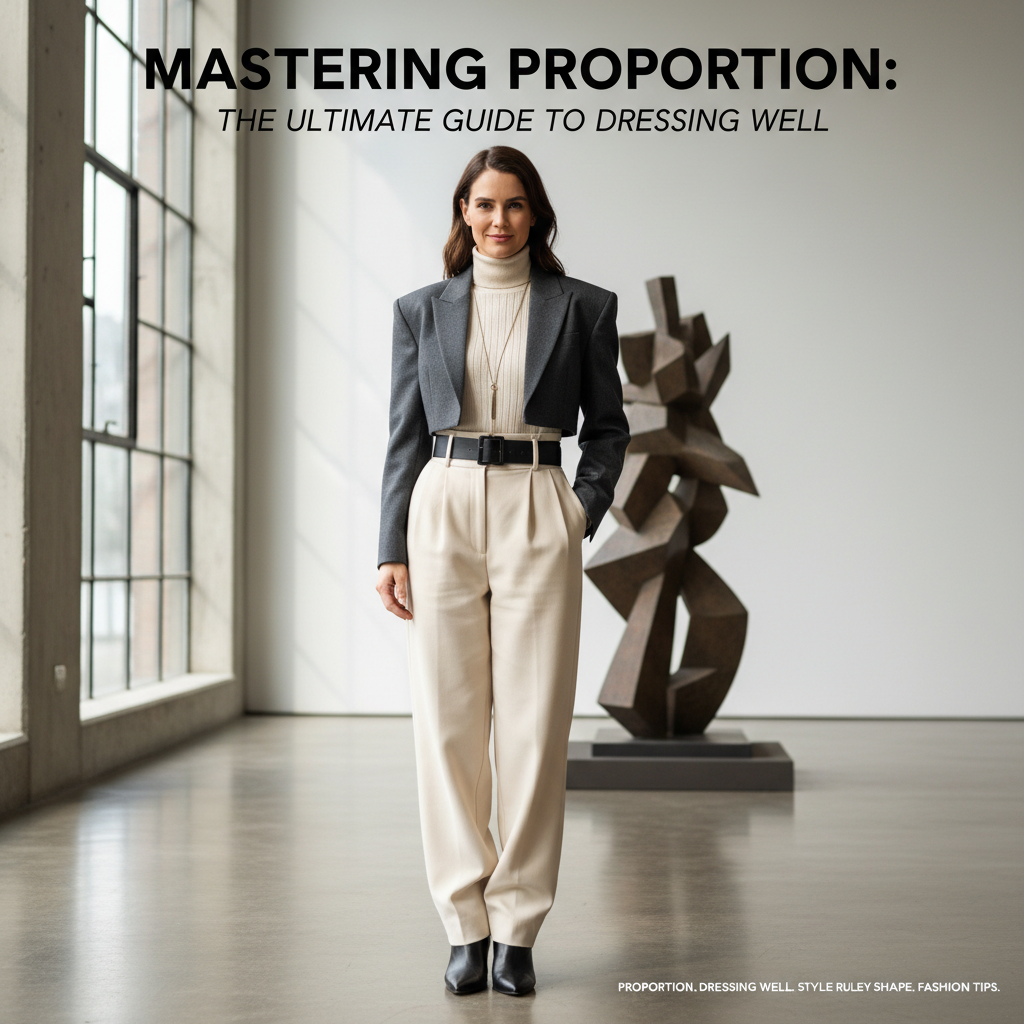
Why Proportion Matters More Than Trends
Fashion trends come and go, but the principles of good proportion are timeless. Mastering proportion means understanding how different elements of your outfit interact to create a visual balance. It's about making your clothes work for your body, rather than against it, ensuring you look polished, put-together, and confident.
The Golden Ratio in Fashion
While not strictly mathematical, the 'golden ratio' (roughly 1/3 to 2/3) serves as an excellent guideline for dividing your body visually. For example, a top that takes up one-third of your body and bottoms that take up two-thirds often creates a pleasing and elongating effect. Avoid outfits that cut your body exactly in half, as this can make you appear shorter or wider.
Key Elements of Proportion to Consider
Lengths:
- Tops: Consider where your top ends. Cropped tops can lengthen legs when paired with high-waisted bottoms. Tunics can flatter by covering hips but ensure they don't overwhelm your frame.
- Bottoms: The length of pants, skirts, and shorts significantly impacts your leg line. Ankle-length pants can be tricky; ensure they hit at the narrowest part of your ankle. Maxis can be elongating if they skim the floor, while minis can make legs look longer.
- Jackets/Outerwear: A cropped jacket can balance a voluminous skirt or wide-leg pants. A longer coat creates a lean, vertical line.
Volume & Fit:
- Balance is Key: If you're wearing a voluminous piece (e.g., wide-leg pants or an oversized sweater), balance it with something more fitted on the other half of your body. A fitted top with wide-leg pants, or a sleek skirt with a chunky knit.
- Avoid Overwhelm: Too much volume everywhere can make you look shapeless or larger than you are. Aim for one 'statement' of volume per outfit.
Horizontal vs. Vertical Lines:
- Vertical Lines: Pinstripes, button plackets, and even long necklaces draw the eye up and down, creating an illusion of height and slenderness.
- Horizontal Lines: While not always bad, horizontal stripes can sometimes make you appear wider. Use them strategically, or balance them with strong vertical elements.
Accessories:
- Belts: Belts are powerful tools for defining your waist and adjusting the visual proportion of your torso and legs. A high-waisted belt can lengthen your lower body.
- Bags & Shoes: The size of your handbag should be in proportion to your body. Oversized bags on a petite frame can be overwhelming. Shoes with pointed toes or a slight heel can extend the leg line.
Practical Tips for Applying Proportion Rules
- Stand in front of a full-length mirror: This is your best tool. Experiment with different combinations and see how they change your perceived shape.
- Take photos: Sometimes, what looks good in the mirror might look different in a photo. This helps you objectively assess your proportions.
- Cuffing & Tucking: Simple adjustments like cuffing sleeves or pant hems, or tucking in a shirt, can dramatically alter proportions and make an outfit look more intentional.
- Consider your body shape: While general rules apply, understanding your unique body shape helps you adapt these principles for optimal flattery.
By consciously considering these proportion rules, you'll develop an innate sense of what looks balanced and flattering, allowing you to build a wardrobe of well-put-together outfits effortlessly.
Frequently Asked Questions
- What is the most important proportion rule?
- Achieving visual balance is paramount. Aim for an outfit where no single element overwhelms another, and your body is divided into pleasing, non-equal segments (e.g., 1/3 and 2/3).
- Can I wear oversized clothes and still have good proportion?
- Yes! The trick is to balance the oversized piece with something more fitted. For example, an oversized blazer with slim-fit pants, or a voluminous dress cinched at the waist.