The Ultimate Guide to Proportion: Dressing Well for Every Body
Mastering proportion is the cornerstone of dressing well, regardless of your body shape or size. This guide breaks down the essential rules of balancing silhouettes, hemlines, and garment lengths to create harmonious and flattering outfits that enhance your natural physique.
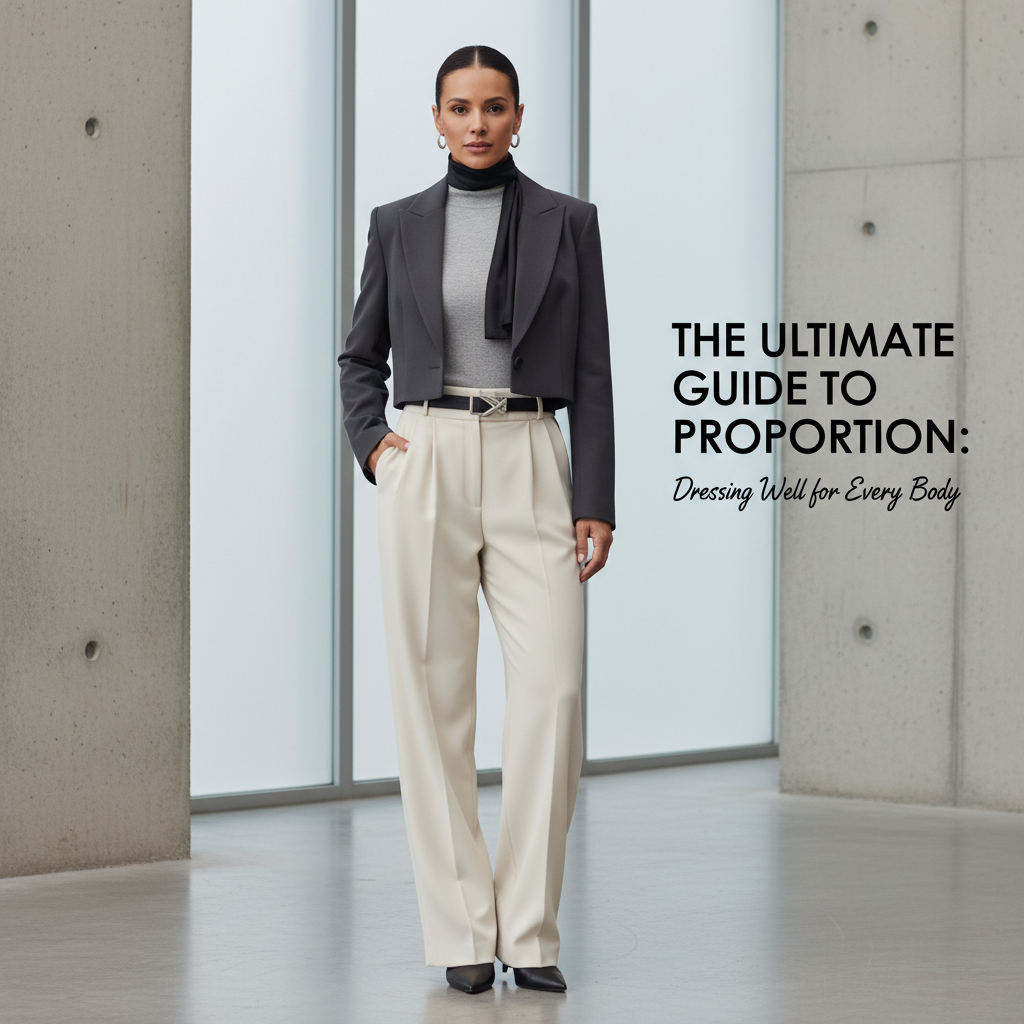
The Ultimate Guide to Proportion: Dressing Well for Every Body
Achieving a well-dressed look isn't just about choosing stylish pieces; it's about understanding how those pieces interact with your body to create a balanced silhouette. The art of proportion dictates visual harmony, making you look and feel your best. Forget rigid fashion rules; this guide empowers you with the knowledge to manipulate proportions to your advantage.
Why Proportion Matters
Proportion refers to the relationship between the different parts of your outfit and your body. When proportions are balanced, an outfit appears aesthetically pleasing and tailored. Conversely, imbalanced proportions can make an outfit look ill-fitting, unflattering, or simply 'off.' Good proportion can visually:
- Elongate your frame
- Define your waist
- Create curves or streamline your silhouette
- Highlight your best features
Key Proportion Principles
1. The Rule of Thirds (or Fifths)
Fashion often employs a visual division akin to the rule of thirds or fifths. Instead of dividing your body in half (which can look stumpy), aim for an outfit breakdown that's roughly 1/3 top to 2/3 bottom, or vice-versa. For example, a cropped top with high-waisted pants creates a long-leg, short-torso illusion, while a tunic over slim pants creates a longer top, shorter bottom.
2. Balance Volume
If you wear something voluminous on top (e.g., an oversized sweater, puff-sleeve blouse), balance it with something more fitted on the bottom (e.g., slim-fit jeans, a pencil skirt). The opposite is also true: wide-leg pants pair well with a fitted top. This creates an hourglass effect or a pleasing contrast, preventing your silhouette from looking boxy.
- Voluminous Top + Fitted Bottom: Blousy top + skinny jeans
- Fitted Top + Voluminous Bottom: Fitted tee + wide-leg trousers
3. Hemlines and Their Impact
Hemlines play a crucial role in proportion. Where a hem falls can dramatically change how your body appears:
- Short Hems (mini skirts/shorts): Elongate the leg, best balanced with longer tops or tailored jackets.
- Knee-Length Hems: Universally flattering, particularly A-line skirts, as they hit the narrowest part of the leg.
- Midi Hems: Can shorten the leg if not styled correctly. Pair with heels or a top that defines the waist to maintain length.
- Maxi Hems: Create a long, flowing line. Ensure they don't drag on the ground.
4. Defining the Waist
Even if you don't have a naturally defined waist, you can create one. Cinching your waist with a belt, choosing high-waisted garments, or opting for dresses with built-in waist definition helps to establish a flattering 1:1 or 1:2 proportion between your upper and lower body, or just to create a more feminine shape.
5. Sleeve Lengths and Necklines
Don't overlook the details. Three-quarter sleeves can make arms appear longer and slimmer by ending at a narrow point. V-necklines elongate the neck and torso, creating a visually taller effect. Experiment with different styles to see what works best for your frame.
MirrorMirror's Takeaway
Understanding proportion isn't about hiding your body but celebrating it by making your outfits work for you. Use MirrorMirror's AI to get unbiased feedback on how well your chosen pieces balance each other, ensuring every outfit is a masterpiece of proportion.
Frequently Asked Questions
- Can I wear all oversized clothing and still look proportionate?
- It's challenging but possible. The key is to ensure *some* part of your body (like ankles or wrists) is visible, and that the fabric drapes well without overwhelming your frame. A statement shoe can also help ground the look.
- How do I know if an outfit's proportions are off?
- Often, it's a gut feeling that something isn't quite right. Visually, you might feel like your legs look too short, your torso too long, or your overall shape appears boxy. MirrorMirror's AI can pinpoint these issues for you.