The Ultimate Guide to Color Matching Your Outfits for Effortless Style
Master the art of color matching to elevate your outfits from ordinary to extraordinary. This comprehensive guide covers everything from basic color theory to advanced techniques, ensuring your wardrobe is always harmonious and stylish. Learn how to select, combine, and accessorize with confidence, making every ensemble a statement of your refined taste.
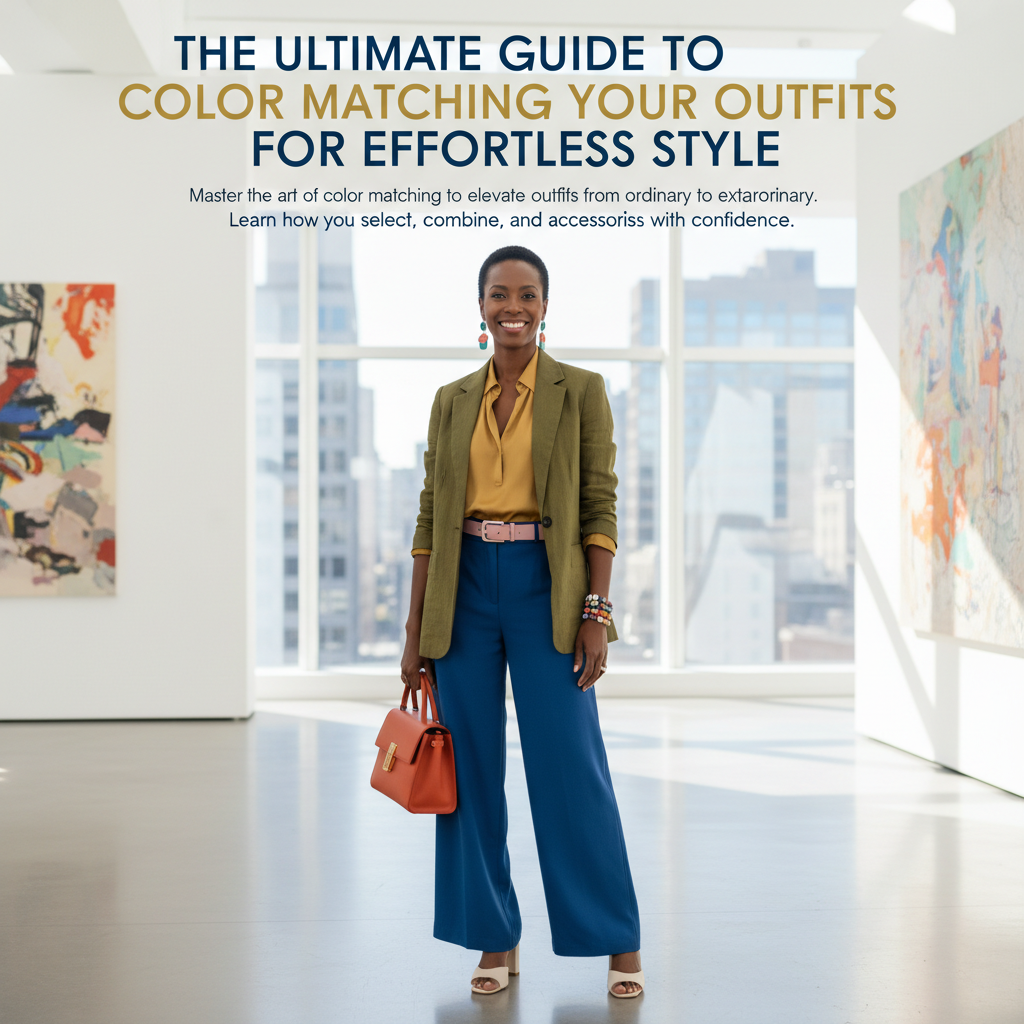
Understanding the Color Wheel
The color wheel is your best friend when it comes to color matching. It visually represents colors and their relationships, helping you create harmonious combinations.
- Primary Colors: Red, blue, yellow. These cannot be created by mixing other colors.
- Secondary Colors: Green, orange, purple. Created by mixing two primary colors.
- Tertiary Colors: Red-orange, yellow-orange, yellow-green, blue-green, blue-violet, red-violet. Created by mixing a primary and a secondary color.
Basic Color Schemes for Fashion
1. Monochromatic
Uses different shades, tints, and tones of a single color. It's elegant, sophisticated, and elongates the body. Think a navy blazer, lighter blue shirt, and dark blue trousers.
2. Analogous
Combines colors that are next to each other on the color wheel, like blue, blue-green, and green. This creates a smooth, flowing look that is visually pleasing.
3. Complementary
Uses colors directly opposite each other on the color wheel (e.g., red and green, blue and orange). This creates high contrast and vibrancy. Best used with one color dominant and the other as an accent.
4. Triadic
Employs three colors equally spaced on the color wheel (e.g., red, yellow, blue). This scheme is bold and playful but can be tricky to balance. Use one color as dominant and the other two as accents.
Advanced Color Matching Techniques
Tints, Tones, and Shades
- Tint: A color mixed with white (e.g., pink is a tint of red).
- Tone: A color mixed with gray (e.g., dusty rose).
- Shade: A color mixed with black (e.g., burgundy is a shade of red).
Understanding these allows for more subtle and nuanced monochromatic or analogous looks.
Neutrals as Your Foundation
Black, white, gray, navy, and beige are your wardrobe workhorses. They pair well with almost any color and provide a calm base for bolder accents. Never underestimate the power of a well-chosen neutral.
Incorporating Prints and Patterns
When wearing prints, identify the dominant colors within the pattern. Then, choose solid colors for other garment pieces that either match one of those dominant colors or are a complementary neutral.
MirrorMirror: Your Personal Color Consultant
Still unsure? MirrorMirror's AI-powered feedback can analyze your outfit's color harmony, tell you if colors clash, and suggest improvements. Upload your look and get instant, honest advice on your color combinations. No more guesswork, just perfect pairings.
Frequently Asked Questions
- What's the easiest way to start color matching?
- Begin with monochromatic outfits or use neutrals as your base, then gradually introduce one accent color at a time.
- How can I tell if colors clash?
- Often, clashing colors create a jarring visual effect. If it feels 'off' to your eye, trust your instinct. MirrorMirror can provide an objective assessment.